

Texting slang moves fast, and if you’ve ever gotten a message that just says “ilysm 🥹” you’ve probably paused for a second. Is it romantic? Is it just a friend being nice? Should you say it back?
Here’s the short answer: ILYSM stands for “I Love You So Much.” It’s one of the most common affection-based abbreviations used in texting, DMs, and social media comments, and it shows up between couples, best friends, and family members alike.
This guide breaks down exactly what ILYSM means, where it’s used, how to reply to it, and how it’s different from similar terms like ILY and ILYSFM so you’re never left guessing again.
What Does ILYSM Mean in Text?
ILYSM is an initialism for “I Love You So Much.” It’s a shortened, casual way of expressing strong affection without typing out the full phrase.
People use ILYSM when a simple “I love you” doesn’t feel like enough, but they still want to keep the message quick and casual. It’s the texting equivalent of adding extra emphasis to how you feel think of it as “I love you,” turned up a notch.
Unlike a lot of internet slang, ILYSM isn’t tied to one specific platform or age group anymore. It shows up in text messages, Instagram comments, Snapchat captions, TikTok replies, and group chats. It’s become such a normal part of digital communication that most people read it without even breaking their scrolling stride.
One important thing to keep in mind: context decides the weight of ILYSM. Sent from a partner after a thoughtful gesture, it can feel deeply sincere. Sent to a friend who just sent a funny meme, it’s often lighthearted and playful. The letters stay the same the emotional temperature changes based on who’s sending it and why.
There’s also a practical reason ILYSM caught on the way it did. Typing “I love you so much” takes time, and in fast-moving group chats or DMs, people naturally reach for shortcuts that still land emotionally. ILYSM does exactly that it keeps the pace of the conversation quick while still letting the other person know they’re appreciated. That’s really the whole appeal: maximum warmth, minimum typing.
It’s also worth noting that ILYSM is almost always written in lowercase in real conversations (“ilysm”), even though it technically functions as an abbreviation that could be capitalized. This is common across texting slang in general casual tone is often signaled by dropping capital letters entirely, which makes the message feel more relaxed and less formal.
Where Is ILYSM Commonly Used?
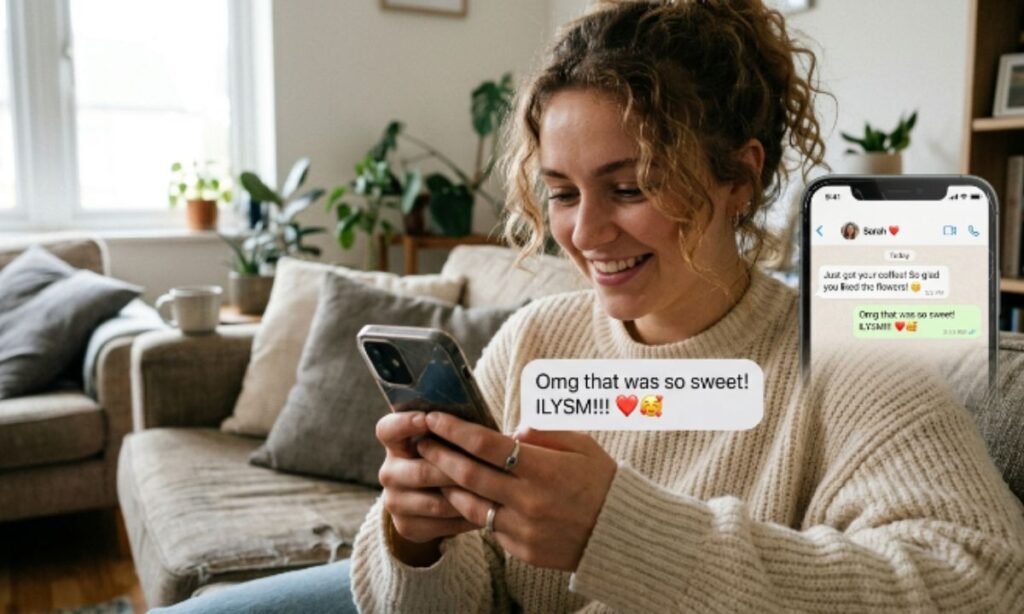
ILYSM pops up across almost every messaging platform, but it tends to cluster around a few specific situations:
- Romantic relationships as a quick, affectionate sign-off or reaction to something sweet a partner did
- Friendships especially close, expressive friendships where “I love you” is used platonically
- Family group chats parents, siblings, or relatives expressing appreciation or love
- Social media comments under a friend’s photo, achievement post, or milestone update
- Birthday or celebration messages as a warm, casual addition to a longer message
You’ll also see it a lot in Gen Z and younger Millennial texting culture, where shortened affection phrases (ILY, ILYSM, ILYSFM) have become the default instead of typing everything out in full.
Examples of ILYSM in Conversation
Seeing ILYSM in real conversations makes the meaning click faster than any definition. Here are a few realistic examples:
Between partners:
A: I made your favorite dinner tonight 🍝 B: omg you’re the best, ilysm 😭❤️
Between friends:
A: thanks for coming with me to the appointment, it meant a lot B: of course, ilysm, i’m always here for you
In a family chat:
Mom: proud of you for finishing your exams! 🎉 You: thank you mom, ilysm 🥹
On social media:
Comment on a friend’s graduation post: “ilysm, so proud of you!! 🎓”
In each case, the phrase is doing the same basic job expressing appreciation or affection but the emotional intensity shifts depending on the relationship and the moment.
When to Use and When Not to Use ILYSM
Like most texting slang, ILYSM works great in some situations and falls flat (or feels off) in others.
When to Use ILYSM
- Replying to a kind or thoughtful gesture from someone close to you
- Signing off a text to a partner, close friend, or family member
- Commenting on a loved one’s social media post
- Expressing quick, genuine appreciation in a casual conversation
- Responding warmly without wanting to make a long, heavy statement
When Not to Use ILYSM
- In professional or work-related messages
- With someone you’ve just started talking to or dating
- In formal emails, official documents, or business communication
- When the moment actually calls for a full, sincere “I love you” instead of shorthand
- With people who might not understand texting abbreviations (some older relatives, for instance)
A simple rule of thumb: if the relationship is casual or new, ILYSM can feel like too much, too soon. If the relationship is already close and affectionate, it usually lands just fine.
Other Meanings of ILYSM in Text
While “I Love You So Much” is by far the most common meaning, ILYSM has picked up a few alternate or joking interpretations online, mostly on platforms like Urban Dictionary. These are far less common and usually used ironically or as a joke among friends rather than as a serious definition. If you ever see ILYSM used in a context that clearly doesn’t fit “I love you so much,” it’s worth asking the sender directly, since slang meanings can vary by community or inside joke.
In everyday texting, though, you can safely assume ILYSM means exactly what it looks like: a warm, affectionate “I love you so much.”
ILYSM Meaning From a Girl vs From a Boy
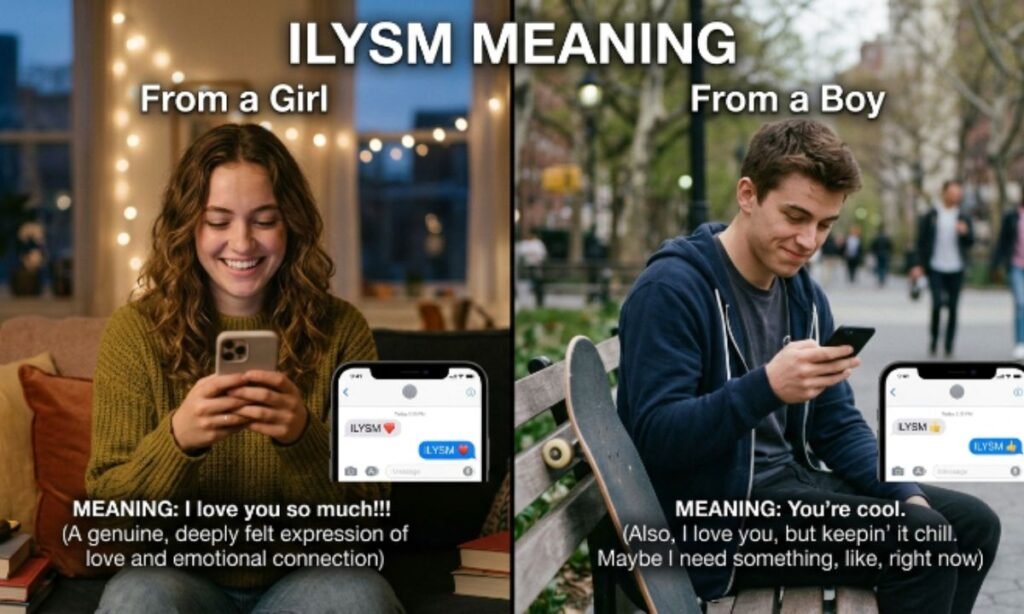
The core meaning of ILYSM doesn’t change based on gender it still means “I Love You So Much” no matter who sends it. What can differ is the typical tone or intent behind it, though this varies a lot from person to person.
| Sender | Common Tone | Typical Context |
| From a girl | Often expressive, warm, sometimes used freely with friends and family, not just partners | Friendships, family chats, romantic texts, social media comments |
| From a boy | Often used more selectively, sometimes reserved for closer or romantic relationships | Romantic texts, close friendships, family |
This isn’t a strict rule plenty of guys use ILYSM casually with friends, and plenty of girls reserve it for serious relationships. The safest way to read it is by looking at the relationship and conversation history, not assumptions based on gender.
How to Reply to ILYSM
Getting an ILYSM text doesn’t require an essay back. A short, warm reply usually does the job perfectly. Some natural ways to respond include:
- Mirror it back: “ilysm too 🥹❤️”
- Add a little more warmth: “aww ilysm, you have no idea”
- Keep it playful: “ilysm 😭 stop being so sweet”
- Go full sentence if it feels right: “I love you so much too, seriously”
- Pair it with an emoji: a heart, a crying-happy face, or a hug emoji softens and personalizes the reply
If the message feels romantic and you’re not on the same page, it’s okay to respond honestly and warmly without mirroring the exact phrase something like “that means a lot to me” keeps things genuine without overcommitting.
Read More:What Do Blue Hearts Mean in Text? Complete Guide & Examples
ILYSM Full Form and Origin
The full form of ILYSM is simply: I Love You So Much.
Like most texting abbreviations, ILYSM grew out of the need to type faster on early mobile phones, where every extra character took more time and effort. As instant messaging, texting, and later social media apps became the primary way people communicated daily, shorthand for common emotional phrases became second nature.
ILYSM followed a similar path to other affection-based abbreviations like ILY (“I love you”) and LY (“love you”), just extended to carry more emotional weight. It’s now widely recognized across texting culture, social media, and messaging apps as an established piece of everyday internet slang rather than a niche or new term.
ILYSM vs ILY vs ILYSFM: Key Differences
These three abbreviations look similar but carry slightly different levels of intensity. Here’s how they compare:
| Abbreviation | Full Meaning | Intensity Level | Common Use Case |
| ILY | I Love You | Standard | Everyday affection, casual sign-offs |
| ILYSM | I Love You So Much | Elevated | Stronger affection, appreciation, emotional moments |
| ILYSFM | I Love You So Fu***ing Much | Highest / intense | Very close relationships, strong emphasis, informal settings only |
ILY is the simplest and most versatile safe to use with almost anyone you have affection for.
ILYSM adds emphasis, making it feel warmer or more heartfelt without becoming too intense.
ILYSFM is the most intense version and includes casual profanity, so it’s best kept for very close friends or partners in relaxed, informal conversations never in formal or mixed-company settings.
Common Mistakes People Make With ILYSM
- Using it too early in a relationship. Sending ILYSM to someone you’ve only been talking to briefly can come across as intense or confusing.
- Assuming it always means romantic love. In many contexts, it’s purely platonic or familial.
- Using it in professional messages. ILYSM has no place in work emails, client messages, or formal communication.
- Overusing it until it loses meaning. Sending it in every single message can dilute its impact over time.
- Misreading the sender’s intent. Not everyone uses ILYSM the same way when in doubt, consider the relationship and context before reacting.
ILYSM in Gen Z Texting Culture Today
In 2026, ILYSM remains a staple of everyday digital communication, especially among teens and young adults. Texting culture continues to favor short, expressive phrases over long, formal sentences, and ILYSM fits that pattern perfectly.
It’s common to see ILYSM paired with emojis, GIFs, or short voice notes to add extra emotional context that text alone can’t always capture. It also frequently shows up alongside similar shorthand like “ilysfm,” “ily2,” or “ilyb” (I love you baby), reflecting how flexible and creative modern texting slang has become.
Rather than fading out, ILYSM has settled into texting culture as a normal, low-effort way to express real emotion proof that even shorthand can carry genuine meaning when used with the right person, at the right moment.
Conclusion
ILYSM is a simple but meaningful piece of texting slang that stands for “I Love You So Much.” Whether it’s sent by a partner, a close friend, or a family member, its core purpose stays the same: expressing warmth, appreciation, and affection in a quick, casual way.
Understanding when and how to use ILYSM and how to reply to it helps you communicate more naturally in today’s fast-paced digital conversations. As texting culture continues to evolve, expect ILYSM to stay right where it is a small phrase that carries a lot of feeling.
Frequently Asked Questions
What does ILYSM mean in a text from a girl?
It means “I Love You So Much,” expressed with the same core meaning regardless of who sends it, though tone can vary based on the relationship.
What does ILYSM mean in a text from a boy?
It also means “I Love You So Much,” often used more selectively depending on how close the relationship is.
Is ILYSM only used romantically?
No, it’s commonly used between friends and family members too, not just romantic partners.
What is the difference between ILY and ILYSM?
ILY means “I Love You,” while ILYSM means “I Love You So Much,” carrying slightly stronger emotional emphasis.
How do you reply to ILYSM?
A short, warm reply like “ilysm too” or an emoji-filled response is usually enough to reciprocate the sentiment.
Is it okay to send ILYSM to a new partner?
It can feel too intense early on, so it’s best reserved for relationships with some established closeness.
Where did ILYSM come from?
It developed from texting culture’s habit of shortening common phrases, following the same pattern as ILY and other affection-based abbreviations.
