

Scroll through any TikTok comment section or Snapchat thread lately, and you’ve probably spotted the letters “ICL” popping up everywhere. Maybe a friend texted “icl that outfit was fire” and you had no idea what they meant. You’re not alone this three-letter abbreviation has become one of the most common honesty markers in Gen Z texting culture, and if you don’t know it, you’re missing out on the tone behind half your group chat.
This guide breaks down exactly what ICL means, where it came from, how it’s used across different platforms, and how it compares to similar slang like NGL and ICR. By the end, you’ll be able to use it (or understand it) with total confidence.
What Does ICL Mean?
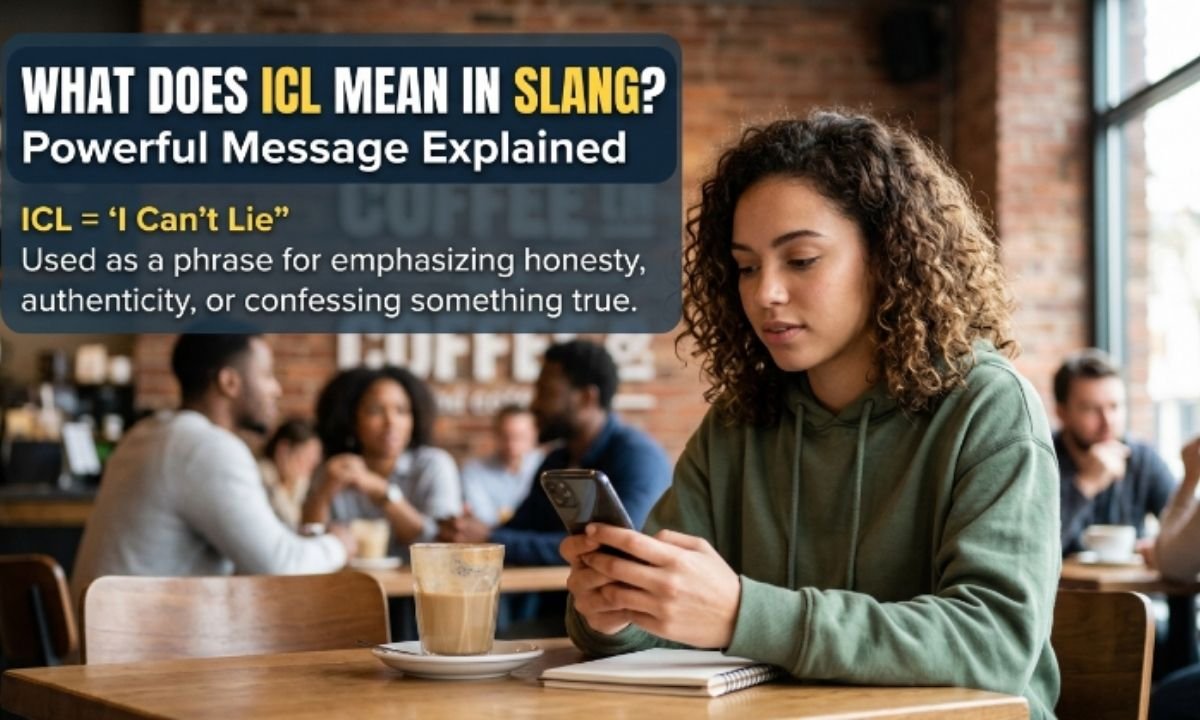
ICL stands for “I Can’t Lie.” It’s used to introduce a statement the speaker wants to present as completely honest, sincere, or unfiltered even if what follows is a little blunt, awkward, or unexpected.
Think of it as a verbal disclaimer. When someone starts a sentence with “ICL,” they’re basically saying, “I’m about to tell you exactly how I feel, no sugarcoating.”
Example: “ICL, I forgot your birthday completely.”
Here, the person isn’t just admitting a mistake they’re signaling that the confession is genuine and not an excuse.
While “I Can’t Lie” is by far the most common meaning, ICL occasionally shows up with other definitions depending on context, which we’ll cover shortly.
What Does ICL Mean in Slang
In slang and internet culture, ICL functions as a truth-telling prefix or interjection. It’s part of a broader category of texting shorthand built around honesty, alongside terms like NGL (“not gonna lie”) and TBH (“to be honest”).
Here’s what makes ICL distinct in casual slang usage:
- It’s almost always used at the start or end of a sentence, not in the middle.
- It softens blunt or emotional statements by framing them as authentic rather than harsh.
- It’s most common among teens and young adults on messaging apps and social platforms.
- It carries a conversational, low-effort tone perfect for quick texts rather than formal writing.
In short, ICL slang meaning is all about signaling sincerity in a fast, casual way.
What Does ICL Mean on Snapchat
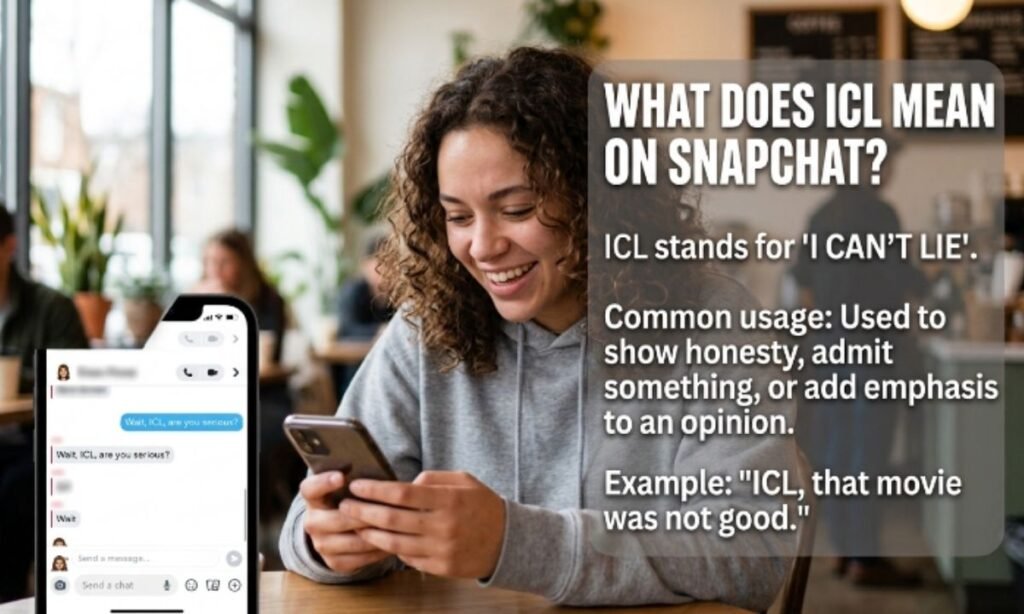
Snapchat conversations move fast, and abbreviations like ICL fit perfectly into that rapid-fire texting style. On Snapchat, ICL almost always keeps its core meaning: “I Can’t Lie.”
People use it in:
- Snap captions when sharing an honest opinion about a photo or moment
- Chat replies during back-and-forth conversations
- Streak messages where users want to add a personal, genuine touch
Example on Snapchat: “ICL, this snap made my whole day 😂”
Because Snapchat is built around short bursts of communication, users lean heavily on compact honesty slang like ICL instead of typing out full sentences.
Read More:What Does Cap Mean in Slang? Hidden Meaning Revealed
What Does ICL Mean on TikTok
TikTok is where a lot of modern slang gets amplified, and ICL is no exception. On TikTok, the meaning stays the same “I Can’t Lie” but the tone often shifts slightly toward emotional or dramatic expression, since TikTok content thrives on relatable, exaggerated reactions.
Common places you’ll spot ICL on TikTok:
- Video captions (“ICL this trend is addictive”)
- Comment sections reacting honestly to a video
- Duets or stitches where creators add personal, candid takes
Example on TikTok: “ICL I’ve watched this video 15 times today.”
On this platform, ICL often works less like a disclaimer and more like a badge of relatability it tells viewers, “this reaction is real, not performative.”
ICL Meaning in Medical
Step outside of texting and social media, and ICL takes on a completely different identity. In medicine specifically ophthalmology ICL stands for “Implantable Contact Lens.”
An Implantable Collamer Lens (also called ICL) is a small artificial lens surgically placed inside the eye, between the iris and the natural lens, to correct vision problems like nearsightedness. Unlike LASIK, which reshapes the cornea using a laser, an ICL doesn’t remove any eye tissue it simply sits inside the eye to help focus light correctly.
Here’s a quick comparison so the two meanings never get confused again:
| Term | Meaning | Context |
| ICL (slang) | “I Can’t Lie” | Texting, social media, casual conversation |
| ICL (medical) | Implantable Contact Lens | Eye surgery, vision correction, ophthalmology |
If you ever see “ICL” mentioned on a clinic website or in a doctor’s note, it almost certainly refers to the surgical lens not the slang term.
What Does ICR Mean in Text
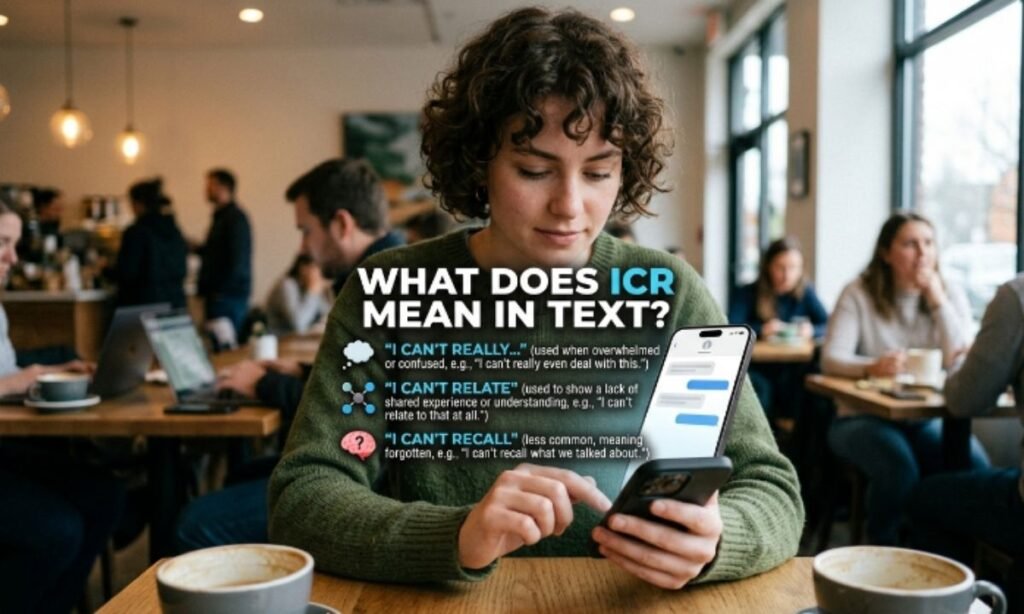
Since ICL and ICR look nearly identical, they’re frequently mixed up. ICR usually stands for “I Can’t Remember.” It’s used when someone forgets a detail, name, date, or event during a conversation.
Example: “What time did we agree to meet? ICR, sorry.”
In some cases, ICR can also mean “I Can Relate,” used to show empathy or shared experience with what someone just said. Context usually makes the intended meaning obvious if it follows a question, it likely means “I can’t remember”; if it follows an emotional statement, it may mean “I can relate.”
We’ll dig deeper into how ICL and ICR differ later in this article.
Origin and History of “ICL”
Like most modern internet slang, ICL didn’t originate from a single viral moment it evolved gradually through texting culture and online forums where users constantly look for shorter ways to express common phrases.
A few key points about its background:
- ICL follows the same abbreviation pattern as older slang like NGL (“not gonna lie”) and TBH (“to be honest”).
- Early documented uses on platforms like Twitter (now X) date back to the late 2010s, often in casual, confessional-style posts.
- It gained wider traction as Gen Z shifted more of their communication to Snapchat, TikTok, and Instagram, where character limits and fast typing encourage abbreviations.
- Its rise mirrors a broader trend of “honesty slang” short phrases designed to flag sincerity in a digital world where tone is easily lost.
Unlike slang tied to a specific meme or celebrity moment, ICL grew organically because it filled a genuine communication gap: signaling authenticity in text, where sarcasm and sincerity often look identical.
How “ICL” Is Used on Different Platforms
While the core meaning of ICL stays consistent, the way it’s used can shift slightly depending on where you see it.
| Platform | Typical Usage | Tone |
| Snapchat | Quick chat replies, snap captions | Casual, personal |
| TikTok | Video captions, comments, duets | Relatable, sometimes dramatic |
| Comments, DMs, story replies | Friendly, expressive | |
| Discord | Group chats, gaming servers | Blunt, humorous |
| Texting (SMS) | One-on-one conversations | Sincere, direct |
Across all platforms, ICL serves the same core purpose: it flags that the message is genuine, not exaggerated or ironic.
ICL in Texting vs. Real Life
One interesting thing about ICL is that it almost never appears in spoken conversation. It’s a text-first abbreviation.
In texting:
- Used constantly to add emotional context to short messages
- Helps compensate for the lack of tone, facial expression, or body language in text
- Feels natural and quick to type
In real life (spoken conversation):
- Rarely said out loud as “I-C-L”
- If used verbally, it’s usually said as a joke, referencing the text version
- People instead say the full phrase, “I can’t lie,” when speaking
This distinction is worth remembering: written slang and spoken slang don’t always overlap. ICL is a great example of an abbreviation built specifically for digital communication.
Examples of “ICL” in Sentences
To fully understand ICL slang meaning, it helps to see it in action across different emotional tones.
- Casual compliment: “ICL, your hair looks amazing today.”
- Confession: “ICL, I ate the last slice of pizza.”
- Humor: “ICL, I have opened the fridge five times today hoping food magically appeared.”
- Support: “ICL, you’re one of the most genuine people I know.”
- Mild criticism: “ICL, that movie was kind of boring.”
- Agreement: “ICL, I think you’re right about this.”
Notice how ICL works whether the sentence is positive, negative, funny, or serious. Its job is always the same to frame the statement as honest.
Variations and Related Slang
ICL belongs to a whole family of “honesty abbreviations” used in modern digital slang. Understanding how it compares helps clarify why it’s used the way it is.
| Slang | Full Meaning | Typical Use |
| ICL | I Can’t Lie | Framing a statement as sincere |
| NGL | Not Gonna Lie | Very similar to ICL, slightly more common |
| TBH | To Be Honest | Slightly more formal honesty marker |
| FR | For Real | Emphasizing seriousness or truth |
| ICR | I Can’t Remember / I Can Relate | Forgetting something or showing empathy |
| IJS | I’m Just Saying | Adding a blunt or pointed opinion |
While these terms overlap in spirit, ICL and NGL are the closest in meaning and are often used interchangeably in casual conversation.
Why Honesty Slang Is Taking Over Gen Z Texting
There’s a reason phrases like ICL, NGL, and TBH have exploded in popularity over the last few years. Text-based communication strips away tone of voice, facial expressions, and body language all the cues humans normally rely on to judge sincerity.
Honesty slang fills that gap by:
- Explicitly labeling a statement as genuine, reducing the risk of misinterpretation
- Making blunt opinions feel softer and more acceptable
- Creating a shared “code” that signals belonging to online youth culture
- Speeding up communication without losing emotional nuance
In a world where sarcasm and jokes are constant online, phrases like ICL act as a small verbal flag: “this part is real.”
How Slang Like “ICL” Signals Trust in Digital Friendships
Beyond just adding honesty, terms like ICL play a subtle role in building trust between friends online. When someone uses ICL before sharing an opinion, it often signals vulnerability they’re choosing to be direct instead of vague or noncommittal.
This matters because:
- It shows the person values the relationship enough to be upfront
- It reduces guessing games about whether a compliment or criticism is genuine
- It creates a shared communication style that feels comfortable and low-pressure
- It can strengthen closeness in digital-first friendships, especially among teens who communicate primarily through text
In many ways, slang like ICL isn’t just about brevity it’s a small social contract that says, “I’m being real with you right now.”
Is “ICL” Safe for Kids?
Generally speaking, yes ICL is considered harmless slang. It doesn’t reference anything violent, sexual, or inappropriate. It’s simply a shorthand way of saying “I can’t lie” or “honestly.”
That said, a few things are worth keeping in mind:
- Context matters more than the abbreviation itself the surrounding message determines whether the conversation is appropriate.
- Like most slang, ICL can occasionally be paired with other terms that parents may want to look into.
- It’s a normal, low-risk part of how kids and teens communicate online today.
For most parents, ICL itself isn’t something to worry about it’s simply digital shorthand for honesty.
When to Use (and Avoid) “ICL”
Like most internet slang, ICL fits perfectly in some settings and feels out of place in others.
Good times to use ICL:
- Texting close friends or family
- Commenting on social media posts
- Casual group chats
- Light-hearted confessions or opinions
Times to avoid ICL:
- Professional emails or workplace messages
- Formal writing (essays, reports, cover letters)
- Conversations with people unfamiliar with slang
- Customer service or business communication
A simple rule of thumb: if you wouldn’t use “lol” or “ngl” in that conversation, skip ICL too.
Conclusion
ICL might just be three letters, but it carries real weight in how Gen Z communicates honesty online. Whether it shows up in a Snapchat reply, a TikTok caption, or a quick text to a friend, its core meaning “I Can’t Lie” stays consistent across platforms. It’s a small linguistic tool that helps digital conversations feel more genuine, direct, and human.
Just remember: outside of texting, ICL can mean something entirely different, like an Implantable Contact Lens in medical settings. Context is everything. Now that you know the difference between ICL and lookalikes like ICR, you’re fully equipped to read and use this slang the right way.
Frequently Asked Questions
What does ICL mean in text?
ICL stands for “I Can’t Lie.” It’s used to introduce a statement someone wants to present as honest or sincere.
Is ICL the same as NGL?
They’re very similar in meaning and use, though NGL (“not gonna lie”) is slightly more widely used across platforms.
Can ICL mean something else?
Yes outside of slang, ICL commonly refers to “Implantable Contact Lens” in medical and eye-care contexts.
Is ICL only used by teens?
It’s most popular among teens and young adults, but people of all ages who use social media may see or use it occasionally.
Does ICL work the same way on every platform?
The core meaning stays the same everywhere, though the tone can shift slightly more emotional on TikTok, quick and casual on Snapchat.
Is ICL appropriate for professional messages?
No, ICL is too casual for formal or professional communication and should be avoided in emails or workplace messages.
What’s the difference between ICL and ICR?
ICL means “I Can’t Lie” (expressing honesty), while ICR usually means “I Can’t Remember” or sometimes “I Can Relate.”
