
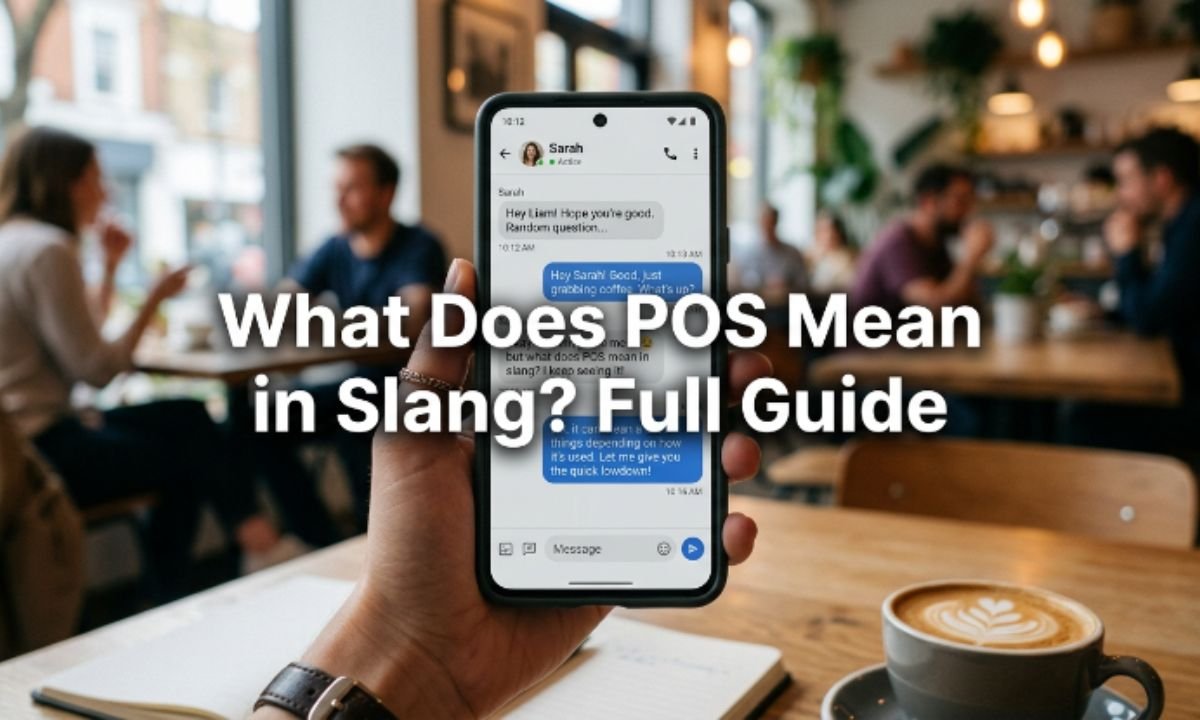

If you’ve ever gotten a text that just says “POS” and felt your stomach drop a little, you’re not alone. This three-letter abbreviation has become one of the most confusing pieces of internet shorthand out there mostly because it doesn’t mean just one thing. Depending on who’s typing it, where it’s typed, and what comes before or after it, POS can be a rude insult, a teen’s secret warning signal, or a completely harmless business term.
This guide breaks down every meaning of POS you’re likely to run into in texting, on Reddit, in banking, in business, and in everyday conversation so you never have to guess again.
What Does POS Mean?
At its core, POS is an abbreviation with several completely unrelated meanings, and the correct one depends entirely on context.
The three most common meanings are:
- Piece of S* (or “Piece of Sh*t”)** a blunt slang insult
- Parent Over Shoulder a warning code used mostly by teens while texting
- Point of Sale a legitimate business and banking term for checkout systems
Because all three share the same abbreviation, POS is a textbook example of how internet slang can be read in wildly different ways depending on the situation. A parent seeing “POS” in their kid’s group chat might panic, assuming the worst, when it may simply be a heads-up that mom or dad just walked into the room.
Origin and History of POS
POS as a slang insult didn’t start online. The phrase “piece of s***” has been part of casual, crude spoken English for decades, long before texting existed. It was a blunt way of calling someone or something worthless. When texting and instant messaging took off, people naturally started shortening common phrases to save time and to soften the visual harshness of typing out profanity and POS became the go-to abbreviation.
“Parent Over Shoulder,” on the other hand, is a newer, teen-specific code. It grew out of the same instinct that created other stealth-texting phrases like PAW (“Parents Are Watching”) or 9 (“parent watching”). As parents got more tech-savvy and started monitoring phones more closely, teens developed a shorthand vocabulary to flag when it wasn’t safe to talk freely and POS became part of that toolkit.
The business meaning, “Point of Sale,” has the oldest and most straightforward history. It’s been used in retail and banking for decades to describe the exact place physically or digitally where a customer completes a purchase, such as a checkout counter or card terminal.
POS Meaning in Slang
In casual slang, especially in texting and on social media, POS most commonly means “Piece of Sh*t.” It’s used to describe a person, object, or situation that someone finds frustrating, disappointing, or morally wrong.
Here’s a quick breakdown of the tone and intent behind this meaning:
| Element | Description |
| Full form | Piece of Sh*t |
| Tone | Negative, emotional, sometimes joking |
| Common targets | People, behavior, products, situations |
| Typical emotion | Anger, frustration, disappointment |
| Formality | Very informal, not safe for work |
This slang use is emotionally loaded. It’s rarely neutral when someone types POS about a person, they usually mean it as a genuine insult, even if the tone is sometimes softened by friendship or humor.
Everyday Situations Where POS Gets Misread
Because POS has multiple meanings packed into the same three letters, misunderstandings happen constantly. Here are some real-world situations where the meaning can get lost in translation:
- A teen texts “POS” to a friend, meaning a parent just walked in but the parent reads it over their shoulder and assumes it’s about them.
- A customer service rep mentions “POS system” in a work chat, and a new employee unfamiliar with retail jargon assumes it’s an insult.
- Someone comments “such a POS” under a product review, and readers debate whether they’re criticizing the product’s quality or making a harsher personal remark.
- A gamer types “POS” about a laggy console, and teammates aren’t sure if it’s a joke or genuine frustration.
The safest rule of thumb: read the surrounding words, not just the abbreviation. Emojis, punctuation, and tone almost always clear up which meaning is intended.
What Does POS Mean on Reddit?
On Reddit, POS is used in largely the same way as it is in general texting slang most often as “Piece of Sh*t.” You’ll see it in comment threads about bad products, unreliable cars, disappointing purchases, or people behaving badly in a story someone shared.
A few things to know about POS on Reddit specifically:
- It frequently appears in subreddits about relationships, venting, or “am I the a**hole“-style discussions, where users use it to describe someone’s poor behavior.
- In tech, gaming, and automotive subreddits, POS is often used to complain about a faulty product (“this laptop is a total POS”).
- Occasionally, in business or retail-focused subreddits, POS refers to Point of Sale software or hardware, especially in threads discussing store systems or payment processing.
As with texting, context is everything. A thread about frustrating customer experiences almost always uses the insult meaning, while a thread in a small-business or retail subreddit is more likely using the professional definition.
POS Meaning in Banking
Step outside slang entirely, and POS takes on a completely professional meaning: Point of Sale.
In banking and finance, POS refers to the location or system where a transaction is completed this could be a physical card terminal in a store or a digital checkout screen online. You’ve probably seen this term already without realizing it, especially on your bank statement.
Common banking-related uses include:
- POS transaction a purchase made using a debit or credit card at a checkout terminal
- POS terminal the physical card-reading machine used in stores
- POS system the combined hardware and software retailers use to process sales, track inventory, and manage receipts
- POS withdrawal in some countries, a small cash-back amount taken out during a card purchase
If you’ve ever looked at your bank statement and seen a line like “POS Purchase – Grocery Store,” that’s this exact meaning at work. It has nothing to do with the slang insult and everything to do with how your card was used.
How POS Is Used on Different Platforms
The meaning of POS can shift slightly depending on where you encounter it. Here’s a platform-by-platform look:
| Platform | Most Common Meaning | Notes |
| Texting (SMS) | Piece of Sh*t / Parent Over Shoulder | Depends heavily on age group and relationship |
| Piece of Sh*t | Common in comments and captions expressing frustration | |
| TikTok | Piece of Sh*t | Sometimes softened or symbol-replaced due to moderation |
| Snapchat | Piece of Sh*t | Used quickly between close friends |
| Discord | Point of Sale or Piece of Sh*t | Business-related servers lean professional; gaming servers lean slang |
| Piece of Sh*t (mostly) | Business subreddits use the professional meaning | |
| Twitter/X | Piece of Sh*t | Common in venting posts or callouts |
Interestingly, on messaging apps and forums geared toward younger teens, “Parent Over Shoulder” shows up far more often than on adult-dominated platforms, where the insult meaning almost always wins out.
POS in Texting vs. Real Life
There’s a noticeable gap between how POS is used in text messages versus how people actually speak it out loud.
In texting:
- POS is typed quickly, often without a second thought
- It can be softened with emojis (like 👀 for the “parent nearby” warning)
- It’s commonly used because typing out the full crude phrase feels harsher
In real life (spoken conversation):
- People rarely say “POS” out loud as an abbreviation they either say the full phrase or avoid it altogether
- When it is spoken, it’s usually read aloud from something someone typed, like reading a text out loud to a friend
- The teen “parent nearby” meaning almost never gets spoken aloud, since saying it defeats the purpose of the warning
This is one of the clearest examples of how digital slang develops its own rules that don’t always translate to spoken language.
POS Meaning in Business
In a professional or retail setting, POS almost always refers to Point of Sale and this is one of the most important business abbreviations in the retail and hospitality industries.
A Point of Sale system typically includes:
- Hardware: card readers, barcode scanners, cash drawers, and receipt printers
- Software: programs that track sales, manage inventory, and generate reports
- Payment processing: the technology that securely handles debit and credit card transactions
- Customer data tools: loyalty programs, purchase history, and receipt emailing
Small business owners, retail employees, and restaurant staff use “POS” constantly in daily operations — from “the POS is down” (meaning the checkout system crashed) to “check the POS report” (meaning the sales summary for the day). In this context, POS carries zero negative connotation. It’s simply industry shorthand.
Examples of POS in Sentences
Read More:ATP Meaning Slang: What It Really Means in Texts, Social Media, and Everyday Conversations
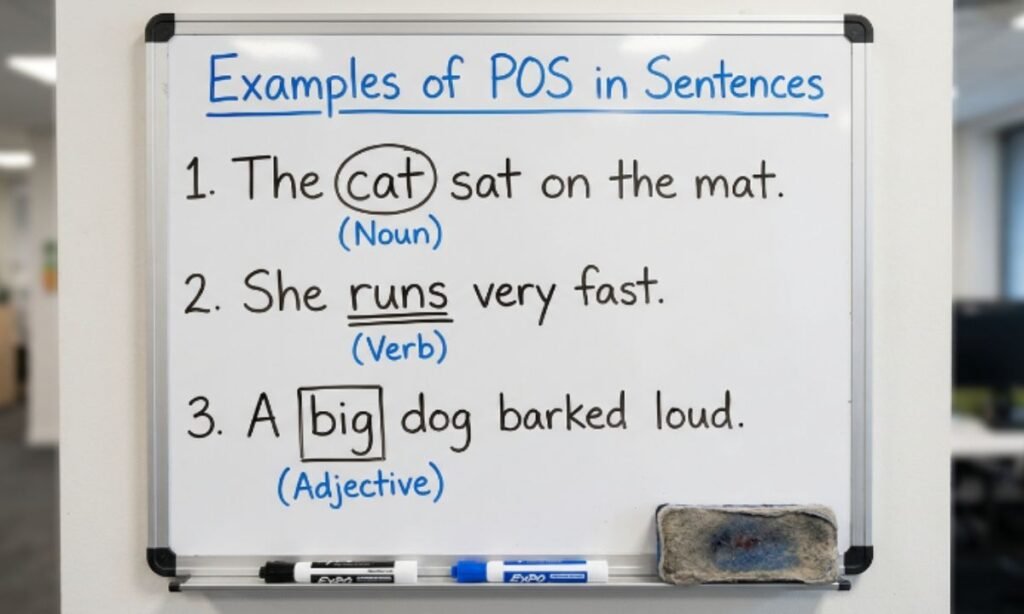
Seeing POS used in different sentences makes the contrast between meanings much clearer.
Slang/insult meaning:
- “That car is such a POS, it broke down twice this week.”
- “He totally ghosted her what a POS move.”
Parent Over Shoulder meaning:
- “POS 👀, talk later.”
- “Can’t explain rn, POS.”
Point of Sale meaning:
- “The store just upgraded their POS system.”
- “I saw a POS charge on my statement from the coffee shop.”
Notice how punctuation, emojis, and surrounding words instantly clarify which POS is being used that’s the pattern to look for whenever you’re unsure.
Variations and Related Slang
POS doesn’t exist in isolation it’s part of a broader family of internet shorthand. Some related terms worth knowing:
- POS 2 occasionally used to intensify the insult, similar to saying “even worse”
- /POS used in some online tone-tagging communities to mean “positive intent,” the opposite of the insult meaning
- PAW “Parents Are Watching,” a close cousin of the teen warning meaning
- KMS/KYS far more serious slang terms that, unlike POS, should always be taken seriously if seen
- SMH “Shaking My Head,” often used alongside POS when venting about someone’s behavior
Here’s how POS compares to a few similar abbreviations:
| Term | Meaning | Tone |
| POS | Piece of Sh*t / Parent Over Shoulder / Point of Sale | Varies widely |
| SMH | Shaking My Head | Disappointed |
| IDC | I Don’t Care | Blunt |
| TBH | To Be Honest | Casual, honest |
| PAW | Parents Are Watching | Cautionary |
Is POS Safe for Kids?
This is where parents tend to have the most questions, and the honest answer is: it depends on which meaning is being used.
- If a child is using POS to mean “Parent Over Shoulder,” it’s largely harmless it’s simply a way of pausing a conversation when an adult is nearby, similar to lowering your voice in person.
- If a child is using POS as an insult meaning “Piece of Sh*t,” it’s mild profanity by internet standards, but it can still signal disrespect, anger, or exposure to more explicit language than parents may be comfortable with.
- If POS shows up in a business or school context, it’s completely neutral and unrelated to slang at all.
For parents monitoring a child’s messages, the safest approach is to look at the full sentence, not just the abbreviation. A “POS 👀” text is very different from “he’s such a POS,” even though both use the same three letters.
When to Use (and Avoid) POS
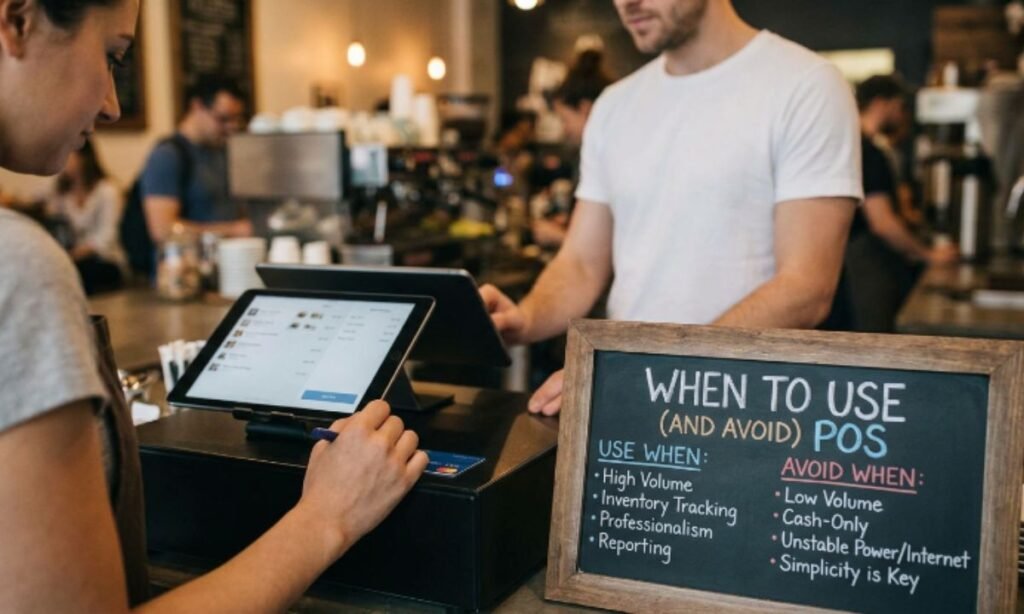
Knowing when POS is appropriate can save you from an awkward or unprofessional moment.
Generally fine to use:
- In casual texts with close friends who understand slang
- In personal social media captions or comments
- In retail, banking, or business conversations where it clearly means Point of Sale
Best to avoid:
- Professional emails or workplace chats (unless referring to a checkout system)
- Messages to someone who might not know the slang meaning and could take it as a literal insult
- Public comments where tone can easily be misread
- Conversations with people you don’t know well, since the insult version can come across as genuinely hostile
When in doubt, spelling out what you mean is always safer than relying on an abbreviation with three very different possible meanings.
Conclusion
POS is one of those rare slang terms that manages to mean three completely different things depending entirely on where and how it’s used. In casual texting and on most social platforms, it usually means “Piece of Sh*t” a blunt, informal insult. Among teens, it can also serve as a quiet warning that a parent is nearby. And in business and banking, it stands for “Point of Sale,” a completely professional and neutral term.
The key to never getting confused again is simple: look at the context. Emojis, tone, platform, and the people involved will almost always tell you which meaning is intended. Whether you’re a parent trying to decode a text, a business owner discussing checkout systems, or just someone curious about internet slang, understanding all three sides of POS means you’ll never misread the message again.
Frequently Asked Questions
What does POS mean in slang?
In slang, POS most commonly means “Piece of Sh*t,” used as an insult toward a person, object, or situation.
Does POS always mean something negative?
No POS can also mean “Parent Over Shoulder” or “Point of Sale,” both of which are neutral, not negative.
Is POS a compliment or an insult?
POS is almost never a compliment; in slang, it’s typically an insult, though tone among friends can make it feel more joking than harsh.
Where did the slang meaning of POS come from?
It comes from the older spoken phrase “piece of sh*t,” which was shortened into an abbreviation once texting became common.
Is POS the same as toxic?
Not exactly “toxic” describes an ongoing negative pattern of behavior, while POS is usually a quick, one-time insult aimed at a specific action or thing.
Is it okay to say POS in front of parents?
It’s best to avoid it, since most parents will read it as mild profanity even if it’s meant casually.
How do I know which meaning of POS is being used?
Check the context: business or banking chats mean “Point of Sale,” teen texts with emojis like 👀 usually mean “Parent Over Shoulder,” and angry or frustrated messages almost always mean the insult.
Bonus: Where Did ATP Slang Originate From?
ATP doesn’t have one single documented origin story it developed naturally as an abbreviation of the long-common spoken phrase “at this point.” As texting culture pushed people toward shorter, faster typing (similar to how “idk” and “smh” evolved), “at this point” got trimmed down the same way. Early recorded slang use dates back to online forums and Urban Dictionary entries from around 2010, but it stayed relatively niche until the 2020s, when heavier phone use and nonstop group chats made the phrase and its abbreviation far more common in everyday texting.
