
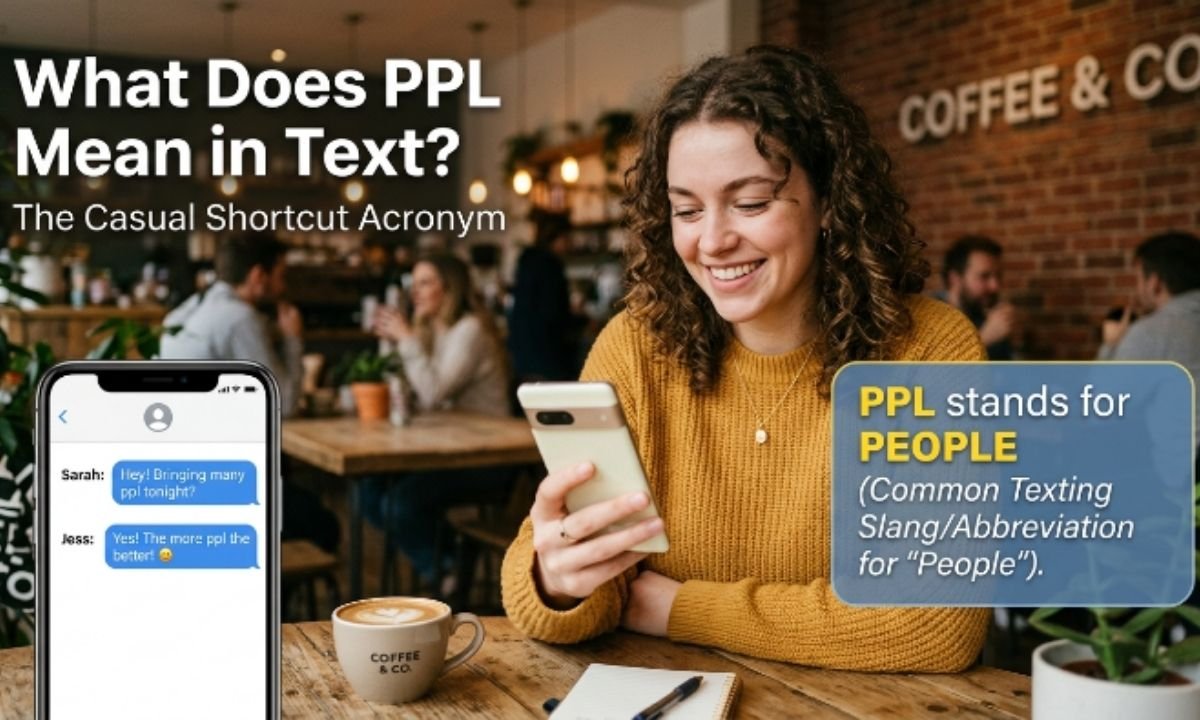

You were scrolling through a group chat, or maybe a comment section, and there it was: “ppl.” No punctuation, no explanation, just three lowercase letters sitting in the middle of a sentence like everyone was supposed to already know what it meant.
Here’s the short version: in texting, PPL almost always means “people.” That’s it. No hidden agenda, no secret code. It’s one of those abbreviations that’s so baked into everyday typing that most people don’t even register it as an abbreviation anymore it’s just how the word “people” gets written when you’re moving fast.
But “PPL” doesn’t stop at texting. It shows up in gyms, business meetings, aviation license applications, and even in completely different languages with their own cultural flavor. This guide breaks down every version of “PPL” you’re likely to run into where it comes from, how it’s used, when it can backfire, and how to reply when someone drops it on you.
The Real Vibe Behind Typing “PPL” Instead of People
Typing “people” takes six keystrokes. Typing “ppl” takes three. That’s really the whole story behind why this abbreviation exists texting rewards speed, and vowels are the first thing to go.
But there’s more to it than just saving time. “PPL” carries a specific tone:
- Casual and unbothered: It signals you’re not trying to sound formal.
- Slightly distancing: Saying “ppl are so dramatic” feels a little more detached than “people are so dramatic,” almost like you’re making a general observation rather than a pointed one.
- Effortless: It fits the rhythm of fast, back-and-forth texting where full grammar would feel stiff.
Most people who type “ppl” aren’t thinking about any of this consciously. It’s automatic the same way “gonna” replaces “going to” in speech without anyone deciding to be lazy about it.
What Does PPL Mean in Text in Urdu?
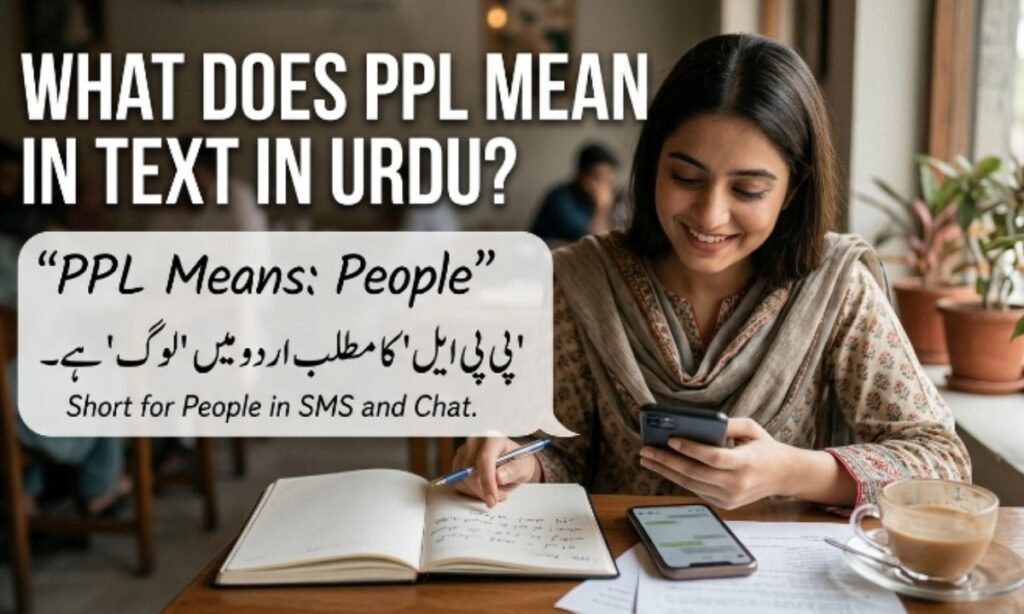
In Urdu texting and chatting (especially in Roman Urdu, where Urdu is typed using the English alphabet), “ppl” is borrowed directly from English and still means “people.” You’ll see it used the same way English speakers use it:
- “Kuch ppl bohat ajeeb hote hain” (Some people are really weird)
- “ppl kya sochenge” (What will people think)
Urdu speakers frequently mix English abbreviations into casual Roman Urdu texting words like “ppl,” “btw,” and “idk” are common because a large chunk of everyday digital communication in Pakistan and among Urdu speakers happens in this hybrid, code-switched style. The meaning doesn’t shift; only the surrounding sentence structure does.
PPL Meaning in Business
In a business or workplace setting, “PPL” can mean a couple of different things depending on the context:
- Informal shorthand for “people” : used in internal Slack messages, quick emails between close coworkers, or casual project notes. Example: “Loop in the ppl from marketing.”
- Pay Per Lead (PPL) :a marketing and sales compensation model where a business pays a fixed amount for every qualified lead generated, rather than paying for clicks or impressions.
- Paid Parental Leave :used in HR and employment documentation, particularly in countries like Australia, to describe a government or employer-funded leave benefit for new parents.
| Context | What PPL Means | Where You’ll See It |
| Casual work chat | People | Slack, internal messages |
| Marketing/sales | Pay Per Lead | Ad campaigns, agency contracts |
| HR/employment | Paid Parental Leave | Policy documents, onboarding paperwork |
Using “ppl” as slang for “people” in a formal email or client-facing document is a fast way to look unpolished — save it for internal, casual conversations.
PPL Meaning in Chat Tagalog
In Tagalog and Taglish (the Filipino code-switch between Tagalog and English) texting, “ppl” keeps its English meaning of “people” and gets slotted directly into Tagalog sentence structure. It’s extremely common because Filipino texting culture already blends English abbreviations into everyday chat.
Examples you’d actually see in a Filipino group chat:
- “Bakit ganon ang ppl minsan?” (Why are people like that sometimes?)
- “Marami pa ring ppl sa labas” (There are still a lot of people outside)
Just like in English, it’s strictly casual reserved for texting, Messenger, and social media comments, not formal Tagalog writing.
PPL Meaning in a Relationship

When “ppl” shows up in a relationship text, it almost never carries romantic meaning on its own the word itself is neutral. What changes the tone is the sentence around it.
- Neutral/observational: “Some ppl just don’t communicate well” a general comment, not aimed at the relationship.
- Passive-aggressive: “Ppl who cancel plans last minute are exhausting” sent right after your partner canceled plans. Here, “ppl” is doing a lot of quiet, pointed work.
- Inclusive/affectionate: “Miss hanging with our ppl” referring to a shared friend group or chosen family.
Because “ppl” creates a small layer of distance compared to naming someone directly, it’s sometimes used to vent frustration without confrontation. If a partner starts using “ppl” instead of “you” during a disagreement, it can be a subtle sign they’re avoiding direct confrontation.
PPL Meaning in the Gym
Step outside of texting and into fitness spaces, and “PPL” takes on a completely different, well-established meaning: Push, Pull, Legs.
PPL is one of the most popular weightlifting split routines, and it organizes training around movement patterns instead of individual muscles or a single “body part” per day.
- Push day: Chest, shoulders, and triceps any muscle involved in pressing movements.
- Pull day: Back and biceps any muscle involved in pulling movements.
- Legs day: Quads, hamstrings, glutes, and calves.
This split can be run 3, 5, or 6 days a week depending on training experience, and it’s popular because it groups related muscles together, manages fatigue efficiently, and gives each muscle group proper recovery time before it’s trained again. You may also see a variant called PPLUL (Push Pull Legs Upper Lower), a 5-day hybrid split combining the classic PPL rotation with upper/lower body days.
Quick tip: If you see “PPL” in a fitness-related caption, comment, or DM, it’s almost certainly about workouts not “people.”
Where This Shortcut Actually Shows Up
“PPL” (as “people”) pops up across nearly every casual digital space:
- Texting/SMS : quick one-liners between friends
- Group chats : talking about a shared crowd of people
- Instagram and TikTok comments :“why do ppl do this 😭”
- Snapchat captions
- Discord and gaming chats
- Reddit threads and forum posts
It rarely if ever shows up in resumes, cover letters, formal emails, academic writing, or professional reports.
Tone and Context: Why “PPL” Can Feel Different Every Time
The word “ppl” itself is neutral. What shifts is everything around it:
- Punctuation:“ppl are wild lol” feels playful; “ppl are wild.” with a hard stop feels flat or annoyed.
- Timing: a slow, delayed “ppl” reply after a serious message can feel dismissive.
- Relationship:the exact same message from a close friend reads as casual; from a coworker you barely know, it can feel oddly informal.
- Capitalization: capital “PPL” (all caps) can sometimes read as more emphatic or emotional than lowercase “ppl.”
This is why the same three letters can feel funny in one chat and cold in another — the abbreviation borrows its tone from the conversation, not the other way around.
Times When “PPL” Makes You Look Bad

Read More:SNM Meaning: What Does SNM Mean in Text and Slang?
There are specific situations where reaching for “ppl” instead of “people” can actively work against you:
- Work emails or messages to your boss: even in casual workplaces, it can make you look like you’re not taking the conversation seriously.
- Formal writing: essays, reports, cover letters, and resumes should always use “people” in full.
- Serious or emotional conversations: telling someone upset “that’s just how ppl are” can sound dismissive, even if that’s not your intention.
- First-time professional contact: a new client, recruiter, or professor forming a first impression of you.
- Talking about specific individuals negatively: “those ppl didn’t even try” reads colder and more cutting than “they didn’t even try.”
Saying the Same Thing PPL, Just Differently
Here’s how the same message shifts depending on whether you use the full word or the abbreviation:
| Full Word | With “PPL” | Tone Shift |
| “People are so dramatic” | “ppl are so dramatic” | More casual, breezy |
| “I don’t understand why people do that” | “idk why ppl do that” | Faster, more relaxed |
| “Some people never learn” | “some ppl never learn” | Slightly more clipped, cooler |
| “I love spending time with my people” | “love my ppl” | Warmer, more affectionate |
Actual Messages People Send With PPL
To make this concrete, here’s what “ppl” actually looks like in real texting:
- “why do ppl always leave the group chat on read 😭”
- “out with my ppl tonight, talk later”
- “some ppl really think they’re slick”
- “ppl keep asking me the same question lol”
- “miss my ppl fr”
Notice the pattern: it’s either pointing at a general, unnamed group of people, or referring warmly to a close friend group.
Does Your Age or App Change How “PPL” Lands?
To some extent, yes though the meaning of the word doesn’t change, its frequency and social weight do.
- Teens and younger users tend to use “ppl” constantly and automatically, alongside other abbreviations like “tbh,” “smh,” “imo,” and “fr.”
- Older users may use it more sparingly, often only in fast texting, and might default to “people” in more contexts.
- Platform matters too: Snapchat, TikTok comments, and Discord lean heavily into abbreviations because of the fast, informal pace of those spaces. LinkedIn and formal email threads almost never see “ppl” used seriously.
None of this means anything alarming it’s simply a reflection of how casual or fast-paced a particular space or generation’s texting habits are.
Misreading “PPL”: What Goes Wrong and Why
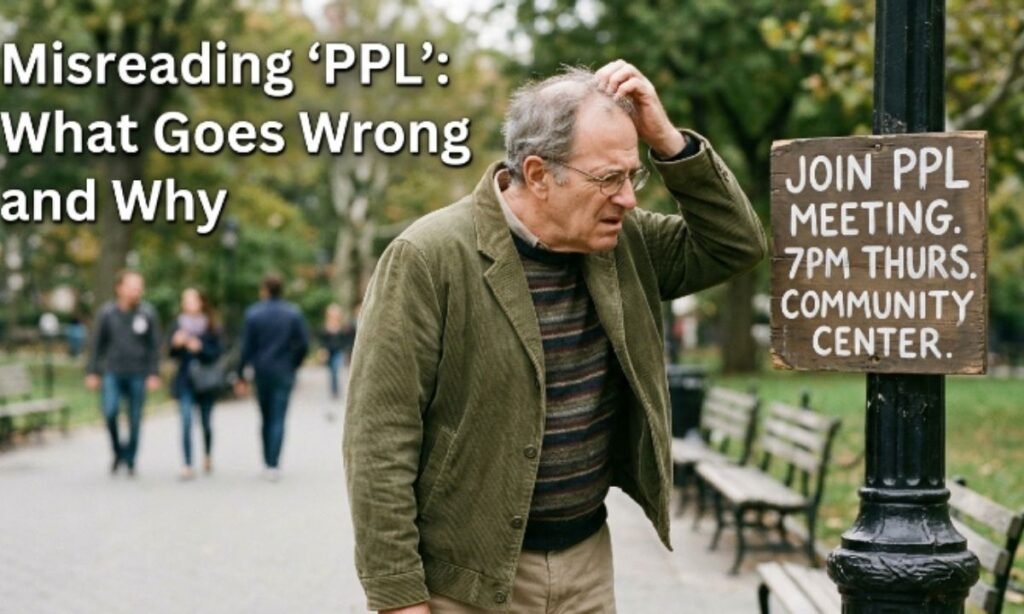
Most confusion around “ppl” comes down to context collapse reading the abbreviation without the surrounding conversation or relationship history. Common misreads include:
- Assuming “ppl” always means specific individuals, when it’s often a general statement about people in general.
- Reading passive-aggression into a neutral, throwaway comment.
- Assuming a fitness-related “PPL” post is about relationships or gossip.
- Confusing business “PPL” (Pay Per Lead) with the casual texting meaning in a work email thread.
When in doubt, the surrounding sentence not the abbreviation tells you what’s actually going on.
Wait, PPL Means Something Else Outside Texting?
Yes quite a few things, actually. Outside of casual chat, PPL is a legitimate abbreviation across multiple fields, and context always makes clear which one is meant:
- Private Pilot Licence (aviation): the certification that allows someone to fly an aircraft for non-commercial purposes.
- Push Pull Legs (fitness): the workout split covered above.
- Pay Per Lead (marketing): a performance-based advertising payment model.
- Paid Parental Leave (HR/employment): an employment benefit, especially referenced in Australian workplace policy.
- Phonographic Performance Limited: a UK-based music licensing and royalty collection organization.
- PPL Corporation: an American energy and utility company.
None of these apply inside a normal text or DM the setting (a pilot’s forum vs. a group chat vs. a marketing meeting) makes the intended meaning obvious immediately.
Replying When Someone Drops “PPL” in the Chat
If someone texts you using “ppl,” you don’t need to overthink your reply. A few natural approaches:
- Match their tone. If it’s casual and light, keep your response just as breezy: “fr, ppl are wild lately.”
- Ask if it’s not clear. If the context is genuinely ambiguous (business chat, unfamiliar group), a quick “wait which ppl?” clears it up fast.
- Don’t read too much into it. Unless the rest of the message clearly signals frustration or sarcasm, “ppl” on its own is not a red flag or a hidden jab.
PPL Meaning on TikTok and Instagram in 2026
On TikTok and Instagram, “ppl” remains one of the most common shorthand terms in captions and comment sections in 2026, right alongside abbreviations like “fr,” “ngl,” and “idk.” It’s used in:
- Caption text: “ppl really said this is normal 💀”
- Comment replies: “why do ppl do this every time”
- Duets and stitches: reacting to a video with a quick “ppl are unserious rn”
The meaning hasn’t shifted it’s still “people” but its usage has become so normalized that many younger users type “ppl” by default and only use “people” when writing something more formal, like a caption meant to look polished or professional.
PPL vs Peeps: What’s the Difference?
“PPL” and “peeps” both stem from the word “people,” but they carry slightly different tones:
| Term | Tone | Typical Use |
| PPL | Neutral, fast, sometimes distancing | General statements, observations |
| Peeps | Warm, affectionate, playful | Referring to close friends or your crew |
“Ppl” tends to show up in broader, more general statements (“ppl never learn”), while “peeps” leans more personal and friendly (“hanging with my peeps this weekend”). They’re interchangeable in some contexts, but “peeps” almost always carries more warmth.
Conclusion
“PPL” is one of the simplest, most widely used texting abbreviations out there and in the vast majority of cases, it just means “people.” The nuance isn’t in the word itself; it’s in the tone, timing, and relationship surrounding it. Outside of texting, the same three letters pick up entirely different meanings depending on the field a pilot’s license, a workout split, a marketing model, or an employment benefit.
The safest rule of thumb: keep “ppl” for casual texts, DMs, and social media, and switch to the full word “people” anywhere formality matters emails, resumes, professional messages, or serious conversations where tone really counts.
Frequently Asked Questions
What is the PPL meaning in text?
In texting, “PPL” almost always means “people.” It’s a casual, faster way of typing the word in DMs, group chats, and social media comments.
Does PPL always mean people?
Not always outside of texting, PPL can mean Push Pull Legs (gym), Private Pilot Licence (aviation), Pay Per Lead (marketing), or Paid Parental Leave (HR), depending on context.
What does PPL mean in a relationship text?
It usually just means “people” in a general sense, though tone and context can make it sound passive-aggressive or affectionate depending on the situation.
Is PPL okay to use in business messages?
It’s fine for casual internal chats between coworkers, but it should be avoided in client-facing emails, reports, or formal business communication.
Can PPL sound rude in a text?
Yes, it can especially when used dismissively in a serious conversation, like responding to someone’s frustration with “that’s just how ppl are.”
What does PPL mean in aviation?
In aviation, PPL stands for Private Pilot Licence, the certification required to fly an aircraft for personal, non-commercial purposes.
How should I reply when someone uses PPL?
Just match their casual tone in your reply, and only ask for clarification if the context genuinely makes the meaning unclear.
